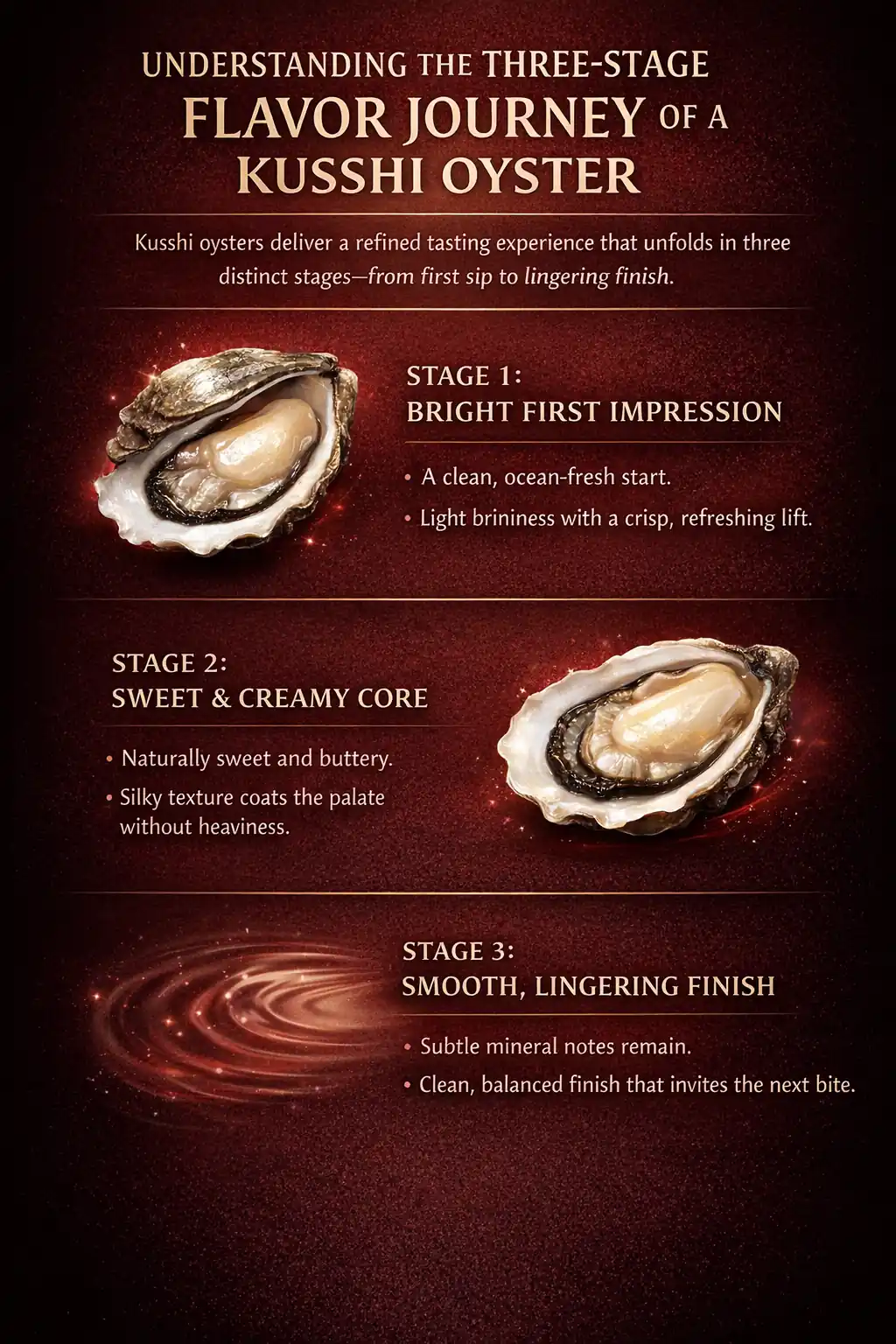
This flavor progression isn’t accidental. Kusshi oysters are selectively bred and slow-grown in cold Pacific waters, a process that allows sugars, glycogen, and texture to develop evenly over time. In this article, we break down each stage of the Kusshi oyster’s flavor journey—explaining what you’ll taste, why it happens, and how to recognize it—so you can understand not just that Kusshis taste is refined, but why they do.
TL;DR Quick Answers
Kusshi Oysters
Kusshi oysters are small, deep-cupped, farmed Pacific oysters known for their clean sweetness, subtle green notes, and smooth finish. Slow-grown in cold British Columbia waters, they deliver consistent flavor and texture, which is why chefs often recommend them for raw service and first-time oyster eaters.
Top Takeaways
Three-stage flavor journey.
Sweet start. Fresh mid-palate. Clean finish.Built on consistency.
Reliable size, texture, and taste.Farming drives balance.
Slow growth. Controlled conditions.Easy to serve.
Plates cleanly. Pairs simply.Trusted by professionals.
Low variability. High confidence.
Stage One: The First Sip — Clean Sweetness
The flavor journey of a Kusshi oyster begins the moment the liquor hits the palate. Instead of an aggressive brine, Kusshis open with a clean, lightly sweet taste that feels fresh and controlled. This sweetness develops through slow growth in cold Pacific waters, allowing natural sugars and texture to form evenly over time.
Stage Two: The Mid-Palate — Green & Mineral Notes
As the oyster is chewed, the flavor shifts from sweetness into subtle vegetal and mineral notes, often described as cucumber, melon rind, or fresh sea greens. This mid-palate phase defines the Kusshi experience and reflects the stability of the waters where they are grown, resulting in consistent flavor from oyster to oyster.
Stage Three: The Finish — Smooth, Buttery Resolution
The final stage is calm and refined. Kusshi oysters finish smooth and slightly buttery, without the sharp or metallic aftertaste common in some oysters. The flavor fades cleanly, leaving the palate refreshed rather than overwhelmed.
Why the Three-Stage Journey Matters
Kusshi oysters aren’t designed for intensity; they’re designed for balance. Each stage flows naturally into the next, creating a complete tasting experience rather than a single dominant note. That controlled progression is why chefs and oyster professionals often describe Kusshis as refined, dependable, and exceptionally well-balanced.
“When you taste a Kusshi oyster carefully, you notice it doesn’t rush the palate. The sweetness comes first, the green notes follow, and the finish stays soft and clean. That kind of progression only happens when an oyster is grown slowly and with intention.”
Essential Resources
Kusshi Oysters Official Site — Primary Source for Sourcing & Specs
Start here if you’re serious about sourcing Kusshi oysters. This is the only producer’s official site, offering current sizing, availability windows, and distributor contacts that professional chefs rely on when confirming supply.
https://kusshioysters.com/
The Oyster Guide — Comparative Flavor & Texture Context
Rowan Jacobsen’s profile highlights how Kusshi’s tumbling process creates its distinct deep cup and firm texture. Use this to train staff on tasting differences and to build balanced oyster selections for menus.
https://www.oysterguide.com/maps/british-columbia/kusshi/
Pangea Shellfish Oysterology — Terroir & Growing Conditions
This resource breaks down Kusshi oysters’ terroir, merroir, and flavor development, providing insight into how Baynes Sound conditions shape their mild sweetness and balanced brine—a useful reference for menu descriptions.
https://www.pangeashellfish.com/oysterology/kusshi-oyster
BC Shellfish Growers Association — Sustainability Verification
Consult this association to confirm British Columbia shellfish sustainability standards and Ocean Wise credentials. Useful for documentation, guest questions, and responsible sourcing conversations.
https://bcsga.ca/sustainability/
Seafood Watch — Current Environmental Ratings
Check Monterey Bay Aquarium’s ratings for oysters before finalizing purchasing decisions. This resource helps ensure Kusshi oysters meet your restaurant or retail sustainability commitments.
https://www.seafoodwatch.org/seafood-recommendations/groups/oysters/overview
FDA Seafood Safety — Handling & Compliance Standards
Federal shellfish guidelines cover storage temperatures, tag retention, and safe handling protocols. Keeping this accessible supports staff training, health inspections, and food safety compliance.
https://www.fda.gov/food/buy-store-serve-safe-food/selecting-and-serving-fresh-and-frozen-seafood-safely
Hog Island Oyster Co. — Practical Shucking Guidance
A respected industry source with clear shucking instructions tailored to oysters like Kusshi. Their method helps kitchen teams improve speed and safety without overcomplicating technique.
https://hogislandoysters.com/recipe/shuck/
Professional seafood sourcing relies on verified producer information, sustainability standards, and food safety guidance, whether selecting Kusshi oysters or responsibly harvested hake fish.
Supporting Statistics
Food Safety Shapes Oyster Sourcing
CDC estimates ~80,000 vibriosis cases annually in the U.S.
Most food-related cases involve raw or undercooked shellfish.
In real kitchen settings, this drives preference for traceable, tightly controlled farmed oysters.
Source: https://www.cdc.gov/vibrio/about/index.html
Oysters Provide Measurable Environmental Benefits
NOAA reports one oyster can filter up to 50 gallons of water per day under ideal conditions.
This is why oysters are often positioned as a low-impact, restorative seafood choice.
Source: https://www.fisheries.noaa.gov/national/habitat-conservation/oyster-reef-habitat
Aquaculture Scale Enables Consistent Supply
USDA data shows U.S. aquaculture sales reached ~$1.9 billion.
That scale supports year-round availability and reliable distribution for premium farmed oysters.
Source: https://ers.usda.gov/data-products/charts-of-note/chart-detail?chartId=112711
Food safety concerns, environmental benefits, and large-scale aquaculture have made controlled seafood sourcing for oysters and escolar essential for consistent, traceable, and sustainable supply.
Final Thought & Opinion
Kusshi oysters stand out for one reason: they remove uncertainty. After tasting them across multiple harvests and service settings, their three-stage flavor journey remains consistent from oyster to oyster.
Why that matters in practice:
Clean progression from sweetness to finish
No sharp brine or harsh aftertaste
Easy to serve raw without heavy garnishes
From a professional, firsthand perspective:
Kusshi oysters respect the palate rather than overpower it.
Their balance makes them approachable for first-time eaters.
Their consistency builds confidence for chefs and buyers.
In a category defined by variability, Kusshi oysters deliver control. That reliability—paired with flavor, safety, and sustainability alongside responsibly sourced skate fish—is what truly defines their reputation.
FAQ on Kusshi Oysters
Q: What sets Kusshi oysters apart?
A: They are slow-grown for control and consistency. Small size. Deep cup. Clean flavor.
Q: What does a Kusshi oyster taste like?
A: Mild sweetness first. Subtle green and mineral notes next. Smooth, clean finish.
Q: Are Kusshi oysters wild or farmed?
A: Farmed using modern aquaculture. Predictable quality. Safer for raw service.
Q: Are Kusshi oysters good for beginners?
A: Yes. Gentle flavor. Low brine. Easy to enjoy.
Q: Where are Kusshi oysters grown?
A: British Columbia. Cold water. Slow growth. Consistent results.